

If you want to get the best results from Veo 3.1, knowing how to craft the right prompts is key. You might have the power of this video-creating AI tool at your fingertips, but without clear and smart prompts, you won’t unlock its full potential.
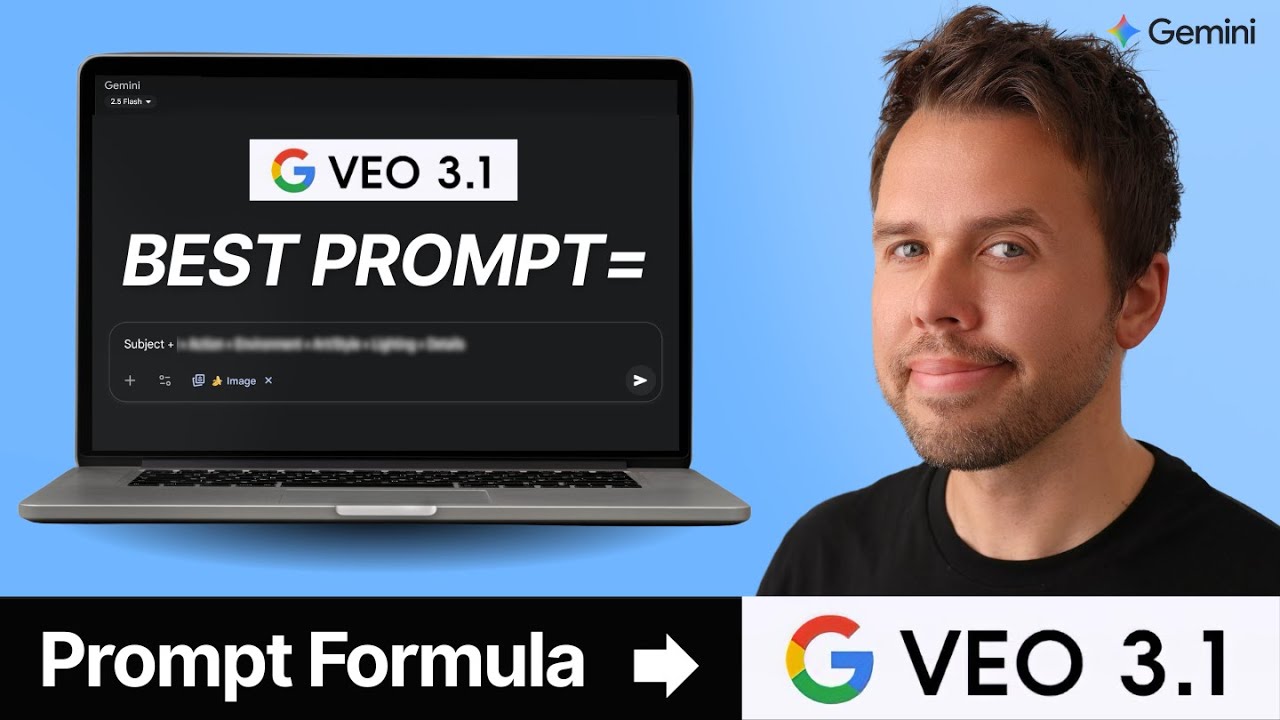
Imagine having a simple formula that helps you direct Veo 3.1 to create exactly what you need – vivid scenes, perfect angles, and the right mood every time. You’ll discover easy-to-follow tips and tricks to prompt Veo 3.1 effectively so your videos come out polished and professional. Ready to transform your video creation process? Let’s dive in and make your ideas shine with Veo 3.1 and Invideo AI.

Credit: www.youtube.com
Introduction To Veo 3.1 And Its Purpose
Veo 3.1 is an advanced tool designed to enhance video creation using artificial intelligence. It helps users craft detailed prompts that guide AI in producing high-quality videos. Understanding Veo 3.1 and how it works is key to getting the best results.
This section explains what Veo 3.1 is, why it is useful for prompting, and its main features. Clear knowledge of these points helps users use Veo 3.1 effectively for video projects.
What Is Veo 3.1?
Veo 3.1 is an AI-powered video creation assistant by Invideo AI. It uses smart algorithms to interpret user prompts and generate video content. This version improves prompt understanding and video output quality.
It serves as a bridge between your ideas and the final video. You write simple or detailed instructions, and Veo 3.1 turns them into visuals and scenes.
Why Use Veo 3.1 For Prompting?
- Easy to use: It understands natural language well, so prompts don’t need to be complex.
- Flexible: Supports many video styles and subjects.
- Efficient: Saves time by automating video creation steps.
- Accurate: Better at capturing the user’s intent from prompts.
These qualities make Veo 3.1 ideal for users with little or no video editing skills. It helps create videos faster and with less effort.
Overview Of Veo 3.1’s Capabilities
| Capability | Description |
|---|---|
| Prompt Interpretation | Understands detailed instructions about scenes, actions, and styles. |
| Customizable Video Styles | Supports various aesthetics, moods, and lighting effects. |
| Scene Composition | Arranges subjects and backgrounds based on user description. |
| Action Detailing | Accurately depicts the movements or activities of characters. |
| Context Integration | Includes relevant environment and background elements seamlessly. |
Veo 3.1 creates videos that closely match the user’s vision. It allows control over many video aspects using simple text prompts.
Key Features Of Veo 3.1 Prompting
Veo 3.1 offers a structured way to create prompts that generate clear and detailed video content. Its key features guide users to craft prompts that capture every essential element of a scene. This ensures the AI understands the request fully and produces high-quality results.
The prompting system focuses on defining the scene like a filmmaker would. It breaks down the prompt into distinct parts to improve accuracy and creativity. Each feature helps shape the video with precise instructions on visuals, actions, and mood.
Cinematography-based Prompt Structure
This feature emphasizes specifying the camera work and shot composition. Users describe how the scene should be framed, such as close-ups or wide shots. Including details like camera angle and movement helps Veo 3.1 visualize the scene clearly.
- Specify shot type (e.g., close-up, panoramic)
- Include camera angle (e.g., low, high)
- Describe camera motion (e.g., pan, zoom)
Subject Identification And Focus
Identifying the main subject or focal point is crucial. This tells Veo 3.1 who or what the video centers on. Clear subject identification ensures the AI focuses on the right elements without confusion.
- Name the main character or object
- Highlight important features or actions
- Clarify if multiple subjects exist and their roles
Action Description For Dynamic Responses
Describing the subject’s actions gives life to the prompt. Veo 3.1 uses this to create motion and interaction in the video. Action details make scenes feel real and engaging.
- Use active verbs to show movement
- Explain interactions between subjects
- Include timing or sequence if needed
Contextual Detailing For Rich Output
Context adds background information about the environment and setting. This feature helps Veo 3.1 build a complete scene with depth and realism. Context includes location, time of day, and other relevant details.
- Describe the environment (e.g., forest, city)
- Mention weather or lighting conditions
- Add props or secondary objects present
Style And Ambiance Specification
Specifying style and ambiance sets the mood and aesthetic. This guides Veo 3.1 in applying the right colors, lighting, and tone. Style could be cinematic, cartoonish, or realistic, while ambiance covers feelings like calm or dramatic.
- Define overall mood (e.g., cheerful, tense)
- Choose visual style (e.g., vintage, modern)
- Include lighting preferences (e.g., soft, harsh)
How Each Feature Benefits Users
The features of Veo 3.1 are designed to improve user experience and output quality. Each feature targets a specific area, helping users create better videos with less effort. Understanding these benefits helps users make the most of the tool.
Enhancing Visual And Narrative Clarity
Veo 3.1 focuses on clear visuals and strong storytelling. It allows precise control over camera angles, shot composition, and scene layout. This clarity helps viewers easily understand the message.
- Cinematography control: Defines camera work for better framing.
- Subject focus: Highlights the main character or object.
- Context setting: Adds relevant background and environment details.
These elements combine to produce videos that look professional and tell compelling stories.
Improving Response Relevance And Depth
Veo 3.1 uses smart prompting to deliver relevant and detailed responses. Users provide clear context and open-ended prompts, ensuring the AI understands the request fully.
- Include detailed descriptions to enrich content.
- Avoid yes/no questions for broader responses.
- Use clear instructions to guide video style and mood.
This approach results in outputs that meet user needs more precisely and offer deeper insights.
Enabling Creative And Flexible Outputs
The tool supports creative freedom and flexible editing. Users can specify styles, moods, and actions to shape video content uniquely.
| Feature | Benefit |
|---|---|
| Style & ambiance settings | Customize the video’s look and feel. |
| Open-ended prompts | Encourage varied and imaginative outputs. |
| Contextual adjustments | Adapt scenes to specific environments or moods. |
Solving Common Prompting Challenges
Veo 3.1 helps users overcome difficulties in prompt creation. It guides users to give clear, detailed, and open prompts that avoid confusion.
- Encourages avoiding vague or yes/no questions.
- Promotes including relevant background and action details.
- Supports iterative refinement for better results.
These solutions reduce errors and improve AI understanding, saving time.
Achieving Consistent High-quality Results
Consistency is key for professional videos. Veo 3.1 ensures steady quality by combining detailed prompts with smart AI processing.
Tips for consistent results:
- Always provide full context and style preferences.
- Use structured prompts defining subject, action, and setting.
- Review and tweak outputs to fit your vision.
Following these steps helps users create polished videos every time.
Pricing And Affordability Breakdown
The cost structure of Veo 3.1 plays a key role in its appeal. Understanding the pricing helps users choose the best plan. This section breaks down the available plans, compares value, and analyzes costs for different users.
Available Plans And Options
Veo 3.1 offers several pricing tiers to suit various needs. Plans range from basic to advanced features. Here is a simple overview:
| Plan | Monthly Cost | Main Features |
|---|---|---|
| Basic | $9.99 | Essential AI video prompts, limited exports |
| Pro | $19.99 | Extended prompt options, HD exports, priority support |
| Enterprise | Custom Pricing | Full features, team collaboration, API access |
Each plan includes access to the core AI tools. Users can upgrade to unlock advanced features and higher export limits.
Value For Money Compared To Alternatives
Veo 3.1 offers competitive pricing versus other video AI tools. Basic plans cost less than many similar products. Pro plans add valuable features at a fair price.
- Lower entry cost: Starts below $10 monthly.
- Feature-rich Pro tier: HD quality and faster processing.
- Customizable Enterprise: Ideal for businesses needing scale.
Users get strong AI video creation capabilities at a reasonable cost. The pricing fits both casual users and professionals.
Cost-benefit Analysis For Different Users
Different users find value in distinct ways. Here’s a breakdown by user type:
- Casual Creators: Basic plan fits hobbyists with light needs.
- Freelancers & Professionals: Pro plan offers more exports and better quality.
- Businesses & Teams: Enterprise plan supports collaboration and API use.
Choosing the right plan depends on video volume and feature needs. The cost matches the benefits for most users.
Pros And Cons Based On Real-world Usage
Understanding the strengths and limitations of Veo 3.1 helps users achieve better results. Real-world use reveals how this AI performs across different scenarios. Users can learn what works well and what needs improvement. This section breaks down key observations from actual usage and user feedback.
Strengths Observed In Various Scenarios
Veo 3.1 excels at creating clear and focused video content. It handles detailed prompts about cinematography, subject, and action effectively. Users appreciate its ability to capture specific camera angles and lighting styles.
- Flexible prompt interpretation: Accepts open-ended instructions, allowing creative freedom.
- Context-aware outputs: Understands background and environment details well.
- Consistent style application: Maintains mood and ambiance through video elements.
- Fast rendering: Generates videos quickly without losing quality.
These strengths make Veo 3.1 suitable for both beginners and professionals seeking quick video creation.
Limitations And Areas For Improvement
Despite its strengths, Veo 3.1 shows some limitations. Complex scenes with multiple actions can confuse the AI. It sometimes misses subtle details in dynamic backgrounds or fast movements.
- Less accuracy: Struggles with very specific or layered prompts.
- Limited customization: Few options to fine-tune output beyond basic styles.
- Occasional repetition: Some video segments repeat similar shots unnecessarily.
- Context gaps: Needs clearer instructions to avoid irrelevant elements.
Users should provide concise and well-structured prompts for best outcomes.
User Feedback Highlights
| Positive Feedback | Negative Feedback |
|---|---|
|
|
User reviews suggest Veo 3.1 is reliable for simple projects but can improve for advanced tasks.
Specific Recommendations For Ideal Users And Scenarios
Veo 3.1 offers tailored solutions for different users and contexts. Understanding which user profiles and situations benefit most helps achieve the best outcomes. This section guides creative professionals, educators, marketers, and content creators on how to prompt Veo 3.1 effectively. It also clarifies when this tool is preferable over alternatives.
Best Practices For Creative Professionals
Creative professionals thrive by using Veo 3.1 to enhance visual storytelling. Follow these tips for sharper results:
- Define the Cinematography: Specify camera angles and shot types to shape the visual style.
- Identify the Subject: Clearly name the main focus or character in your prompt.
- Describe the Action: State what the subject is doing to add dynamic motion.
- Set the Context: Provide details about the environment and background elements.
- Specify Style and Ambiance: Include mood, lighting, and aesthetic preferences.
Example prompt: "A close-up shot of a painter working in a sunlit studio, with warm colors and soft shadows."
Use Cases For Educators And Students
Educators and students benefit from Veo 3.1 by creating engaging educational videos and presentations. Use these strategies:
- Keep Prompts Open-Ended: Encourage exploration and varied answers.
- Provide Clear Context: Explain the topic or subject matter precisely.
- Use Simple Language: Frame prompts in easy words for better AI understanding.
- Encourage Creativity: Ask for examples, summaries, or explanations in different styles.
Example prompt: "Explain the water cycle with animated diagrams in a friendly tone."
Tips For Marketing And Content Creation
Marketers and content creators can use Veo 3.1 to produce appealing videos quickly. Apply these tips:
- Focus on Target Audience: Mention who the video is for and their preferences.
- Highlight Key Messages: Clearly state the product or service benefits.
- Use Emotional Triggers: Specify moods like excitement or trust to engage viewers.
- Request Call-to-Actions: Direct the AI to include prompts like “Subscribe” or “Learn More.”
Example prompt: "Create a vibrant video showcasing eco-friendly products with upbeat music and a call-to-action to shop now."
When To Choose Veo 3.1 Over Other Tools
Choose Veo 3.1 in these scenarios for superior results:
| Scenario | Why Veo 3.1 Fits Best |
|---|---|
| Need detailed cinematic control | Allows precise prompts defining camera work and ambiance |
| Educational content requiring clarity | Handles simple, open-ended prompts with clear context |
| Fast production of marketing videos | Generates engaging, audience-focused content efficiently |
| Users seeking flexible style and mood options | Supports varied aesthetic and emotional tones in videos |
Veo 3.1 excels where clarity, creativity, and contextual detail matter most. It adapts well to diverse industries and skill levels.
Conclusion: Maximizing Results With Veo 3.1
Using Veo 3.1 effectively requires clear and detailed prompts. This AI tool responds best when given precise instructions. Understanding key prompting techniques helps you get the most from Veo 3.1. Focus on clarity, context, and creativity to improve results.
Summary Of Key Takeaways
- Be specific: Clearly state the subject, action, and style.
- Provide context: Describe the environment and background details.
- Use open-ended prompts: Encourage diverse and rich responses.
- Focus on style and ambiance: Define mood, lighting, and visual tone.
- Keep language simple: Use short sentences and clear words.
Final Tips For Effective Prompting
- Start with a clear goal: Know what you want Veo 3.1 to create.
- Break down prompts: Include subject, action, and setting step-by-step.
- Test and refine: Adjust prompts based on the output you receive.
- Use examples: Provide sample styles or references in your prompt.
- Keep prompts open: Avoid yes/no questions for creative results.
Resources For Further Learning
Explore these resources to improve your prompting skills and learn more about Veo 3.1:
| Resource | Description | Link |
|---|---|---|
| Veo 3.1 User Guide | Official manual with detailed instructions and tips. | invideo.io |
| Prompt Writing Tips | Learn how to craft clear and effective prompts. | Quora Guide |
| AI Cinematography Formula | Structure prompts focusing on camera work and ambiance. | Google AI |
Credit: www.youtube.com
Credit: skywork.ai
Frequently Asked Questions
How To Write A Good Prompt For Veo 3?
Write clear, specific instructions for Veo 3. Include subject, action, context, and desired style. Keep sentences concise and focused.
How To Create A Json Prompt For Veo 3?
Create a JSON prompt for Veo 3 by defining key elements: cinematography, subject, action, context, style, and ambiance in JSON format. Structure the data clearly with relevant details to guide Veo 3’s processing effectively.
How To Make A Good Prompt?
Craft clear, specific prompts with context. Use open-ended questions to invite detailed responses. Define the subject, action, and style. Keep sentences concise and focused. This approach ensures engaging, accurate, and creative answers from AI.
What Are Some Examples Of Prompts?
Examples of prompts include: “Explain artificial intelligence simply,” “Suggest a mental well-being routine,” or “Rewrite a story from another perspective. ” They can ask for summaries, creative writing, or specific tasks like recipe creation or marketing strategies.
Conclusion
Crafting clear and detailed prompts helps Veo 3.1 deliver better results. Focus on defining the subject, action, and context in your request. Keep prompts open-ended to allow creativity and flexibility. Use simple language and include style or mood details to guide output. Practice makes perfect—try different prompts to see what works best. For enhanced video creation, explore tools like Invideo AI. This tool supports your creative process and complements Veo 3.1’s capabilities well. Keep experimenting and enjoy creating great videos!
